
Whole-house repipe
All the supply piping in the house comes out of service at once, and every sink, toilet and appliance gets its own new stop valve. Sections hidden behind finished surfaces are disconnected and abandoned in place.
Pipes that keep springing leaks, taps with weak pressure, or hot water that comes out tinted brown can all mean the supply piping is worn. We replace it throughout Denver homes and also lay new water service lines from the meter pit.
Repipes cover Denver and the nearby cities we serve.
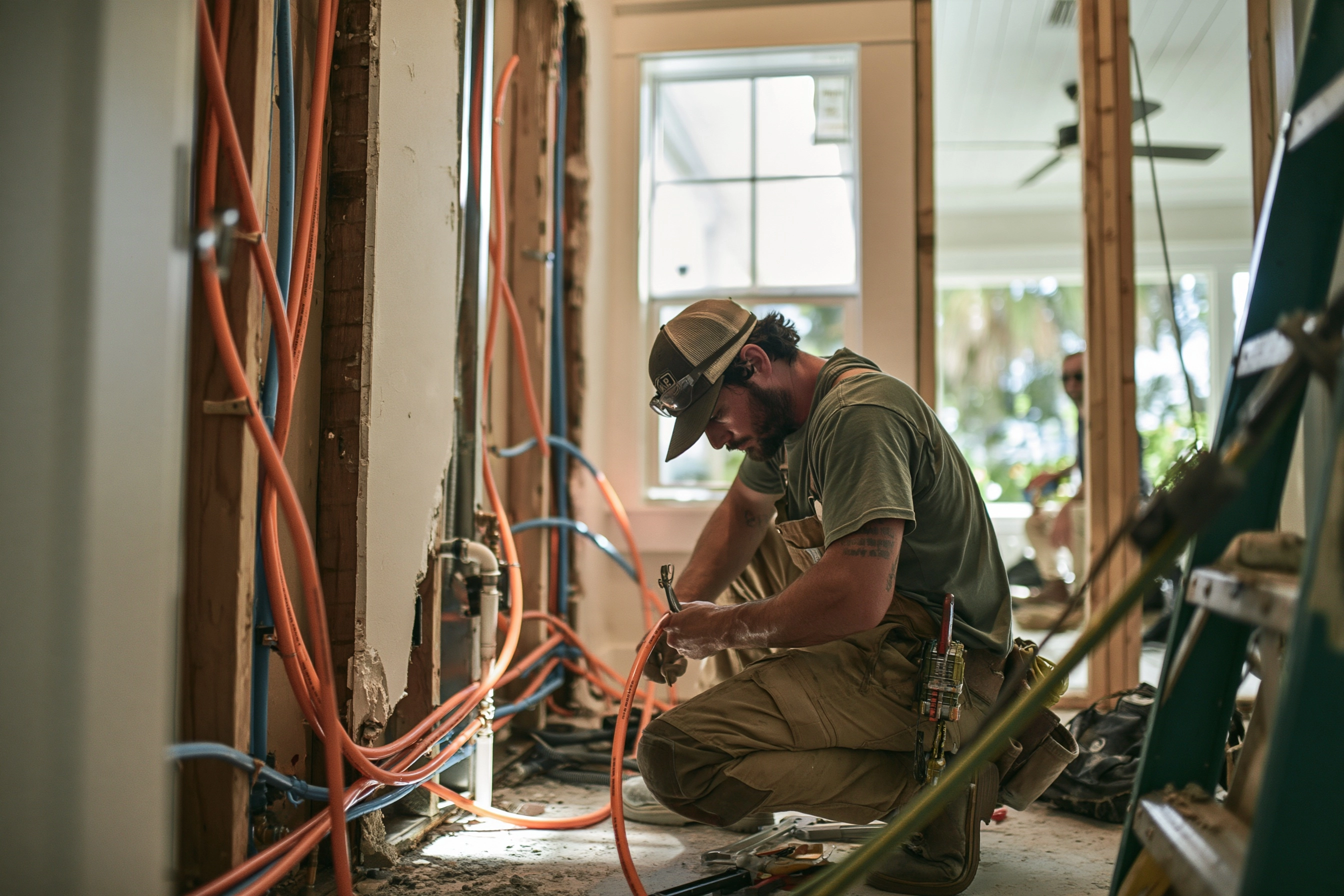
All the supply piping in the house comes out of service at once, and every sink, toilet and appliance gets its own new stop valve. Sections hidden behind finished surfaces are disconnected and abandoned in place.
Sometimes only one part of the system is failing, like the lines feeding a single bathroom or a stretch across the basement ceiling. Replacing only that part keeps the job smaller.
If the buried pipe between the meter pit and the foundation is leaking or choked with corrosion, we lay a new one and tie it in at the pit and inside the house.
PEX is bendable plastic tubing that threads through finished walls with few joints. Copper is stiff metal with a long service record. Choose either, and the quote is written for that material.
Denver Water says the chance of a lead service line is higher in homes built before 1951. Because the service line belongs to the owner, so does the choice to replace it, and Denver Water says owners who pay for that work themselves may be eligible for partial reimbursement.
In Denver, more than 3 in every 10 homes date from before 1960. Pipes in a house that age could be original or decades newer, which is why the first visit is a look at what is installed.
Denver’s permit exemptions cover general repairs that leave the existing plumbing unchanged. A repipe replaces and reroutes that plumbing, so it falls outside the exemption. Water service lines appear on the city’s quick-permit list for single-family homes and duplexes.
Expect a handful of small holes cut in the drywall, not torn-out walls. New pipe is pulled through, joined and tested under pressure before those holes are closed up again. You will be without water only during parts of the work.
Leaks you can’t locate need leak finding first. Swapping the heater during the same job? Our water heater page covers that. Our homepage lists the rest.
Call us and tell us what is going on and where you are. The call is free, and you get a free, personalized quote with no obligation. We're here to help.
Call (855) 321-3426